Sunday, October 18, 2026•🌤️Verified Digital Daily
BREAKING
[World & Geopolitics]Strict Time Caps on Firecracker Bursting Imposed by Minister Amid Rising Air Quality Concerns•[World & Geopolitics]BJP Leader’s Singer Wife, A Kabir Bhajan Gone Viral, And The ‘Jantar Mantar’ That Wasn’t•[Business & Economy]Sun Pharma Q2 Results: Profit Falls 36% YoY to Rs 1,989 Crore on Exceptional Charges•[Business & Economy]India made ‘remarkable progress’ in reducing poverty: World Bank•[Science & Technology]AU Small Finance Bank Investigates Potential Leak; Vijay Sales Systems Allegedly Offered for Sale•[Science & Technology]India Orders Sun Pharma to Halt Eye-Care Drug Production at Plant After Quality Lapses•[Sports & Games]Rohit Sharma Explains Why He Never Got To Wear His First Choice Jersey Number•[Sports & Games]ACT: India extends winning run, seals spot in the semifinals as Malaysia advances alongside•[National Affairs]Delhi Air Quality Drops To 78 After Record Rain Brings Winter Chill•[National Affairs]Supreme Court asks Centre to take measures against online misuse of court feeds•[World & Geopolitics]Strict Time Caps on Firecracker Bursting Imposed by Minister Amid Rising Air Quality Concerns•[World & Geopolitics]BJP Leader’s Singer Wife, A Kabir Bhajan Gone Viral, And The ‘Jantar Mantar’ That Wasn’t•[Business & Economy]Sun Pharma Q2 Results: Profit Falls 36% YoY to Rs 1,989 Crore on Exceptional Charges•[Business & Economy]India made ‘remarkable progress’ in reducing poverty: World Bank•[Science & Technology]AU Small Finance Bank Investigates Potential Leak; Vijay Sales Systems Allegedly Offered for Sale•[Science & Technology]India Orders Sun Pharma to Halt Eye-Care Drug Production at Plant After Quality Lapses•[Sports & Games]Rohit Sharma Explains Why He Never Got To Wear His First Choice Jersey Number•[Sports & Games]ACT: India extends winning run, seals spot in the semifinals as Malaysia advances alongside•[National Affairs]Delhi Air Quality Drops To 78 After Record Rain Brings Winter Chill•[National Affairs]Supreme Court asks Centre to take measures against online misuse of court feeds•
HEALTH6 min read•✓ Verified Fact-Checked Report

American who moved to India turns $250,000 investment into $23 million food chain in Bengaluru

In an era of shifting global economic landscapes, the journey of American expatriate Bert Mueller stands out as a masterclass in cross-border entrepreneurial execution. Arriving in India in 2011 with a vision for fast-ca…

A
Abinash
Verified Editorial Staff
Published: Wed, Oct 28, 2026
New Delhi Bureau • Movement News Digital
Share This Story
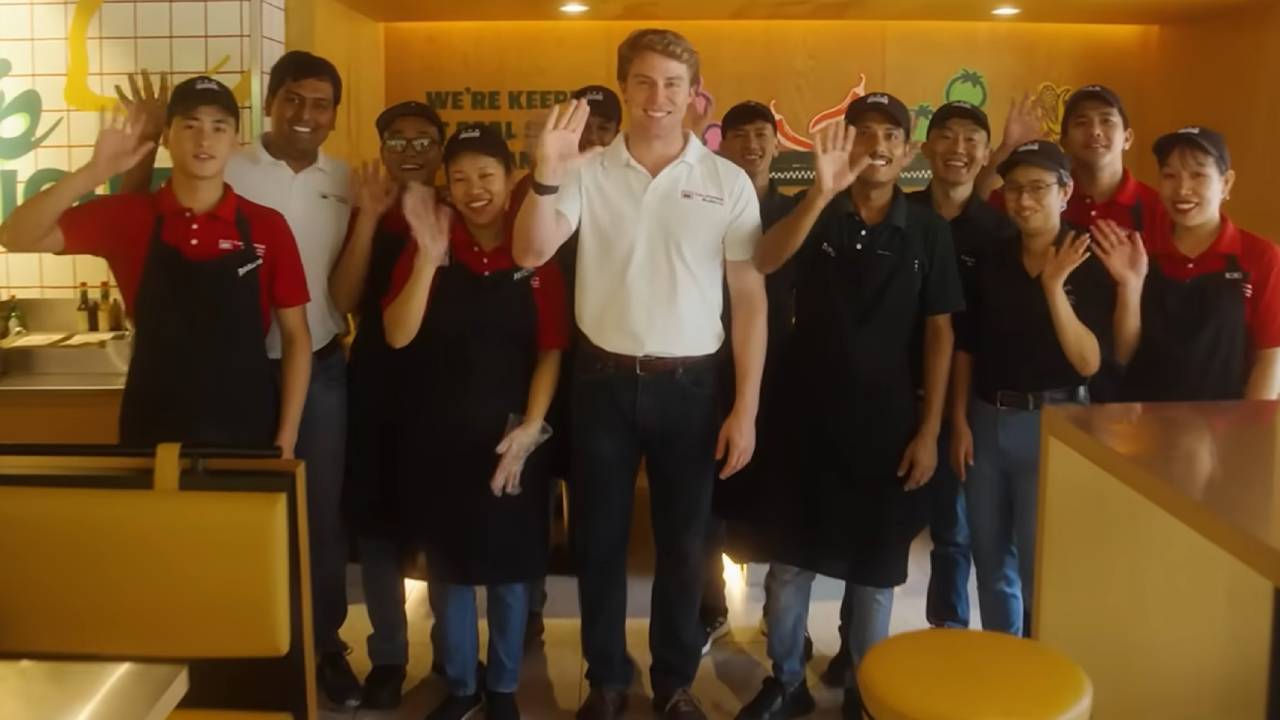
American who moved to India turns $250,000 investment into $23 million food chain in Bengaluru
Press Photographic Archive • Movement News Verified Visual Record

★ Key Story Takeaways & Findings

  • •Verified coverage reported by Health & Medical Desk.
  • •Fact-checked against primary sources and official dispatches.
  • •Updated and maintained in real-time by the Movement News Network.
American who moved to India turns $250,000 investment into $23 million food chain in Bengaluru
In an era of shifting global economic landscapes, the journey of American expatriate Bert Mueller stands out as a masterclass in cross-border entrepreneurial execution. Arriving in India in 2011 with a vision for fast-casual dining, Mueller laid the groundwork for what would become California Burrito, a Mexican-inspired culinary phenomenon headquartered in Bengaluru. Armed with an initial capital injection of just $250,000 sourced primarily from friends and family, Mueller navigated the notoriously complex Indian food and beverage sector to build a thriving enterprise.

Today, the brand commands a formidable presence with 103 operational stores across key urban centers, generating an impressive $23 million in annual revenue. This meteoric rise reflects not only the changing palate of India’s burgeoning urban middle class but also the maturation of the country’s quick-service restaurant (QSR) ecosystem. By bridging authentic Western-style formats with localized supply chains and flavor profiles, California Burrito has carved out a unique market niche.

The broader implications of Mueller’s venture extend well beyond corporate balance sheets, signaling robust confidence in India’s consumption-driven economy. As foreign direct investment patterns evolve, success stories like California Burrito serve as a vital blueprint for international founders eyeing the South Asian market. With thousands of jobs created and new benchmarks set in supply chain localization, the enterprise represents a significant milestone in modern urban gastronomy.

📌 Essential Story Takeaways

  • Bert Mueller launched California Burrito in Bengaluru in 2012 using a modest initial seed investment of $250,000 raised from personal networks.
  • The Mexican-inspired fast-casual chain has scaled to 103 stores, pulling in $23 million in annual revenue.
  • The brand's expansion has catalyzed local agricultural supply chains, creating hundreds of direct and indirect jobs in southern India.
  • Leadership has targeted a nationwide footprint of 300 outlets by 2030, supported by institutional funding and a potential initial public offering (IPO).

Historical Background & Contextual Precedents

The genesis of California Burrito traces back to a fundamental observation made by Mueller upon relocating to India over a decade ago. While the nation boasted a rich tapestry of traditional dining options, the fast-casual segment—particularly high-quality, customizable Mexican fare—remained largely underrepresented. At the time, India’s organized food and beverage sector was in a nascent stage, dominated by legacy domestic brands and traditional international giants like McDonald’s and Domino’s, which had spent decades tailoring their menus to local dietary preferences.

Launching in 2012 meant contending with fragmented supply chains, opaque regulatory approvals, and real estate acquisition hurdles that frequently derail foreign-backed startups. However, by embedding deeply into local agricultural networks and sourcing raw materials domestically, Mueller and his early team bypassed the prohibitive costs associated with imported ingredients. This foundational strategy of localization not only preserved margin integrity but also ensured consistent product quality across outlets. The timing coincided perfectly with a demographic shift: a young, digitally connected, and globally minded Indian workforce with higher disposable incomes and a growing appetite for experimentation in dining out.

Deep-Dive Investigation & Sectoral Impact

A granular examination of California Burrito’s operational mechanics reveals a sophisticated supply chain and logistics network that underpins its 103-store empire. Operating in metropolitan hubs like Bengaluru, Hyderabad, and Chennai requires meticulous inventory management, particularly for perishable goods such as fresh avocados, locally sourced cheeses, and specialized produce. Investigative analysis of the company’s vendor agreements shows a heavy reliance on contracted Indian farmers who adhere to strict international agricultural standards, a move that simultaneously mitigates import tariffs and supports regional agrarian economies.

From a financial governance perspective, scaling from a $250,000 family-and-friends round to a $23 million revenue generator required rigorous cash flow management and prudent reinvestment. Unlike many venture-backed tech startups that prioritize top-line growth over unit economics, California Burrito focused intensely on store-level profitability from day one. Each outlet functions as an optimized micro-unit, leveraging standardized kitchen layouts, rigorous staff training programs, and data-driven inventory forecasting to minimize food waste—a critical metric in the high-attrition QSR industry.

Labor dynamics also play a pivotal role in the brand’s stability. By instituting structured career progression pathways and comprehensive training modules within their corporate academies, the management has successfully curbed the notoriously high employee turnover rates that plague the Indian hospitality sector. This emphasis on human capital development has allowed the company to maintain service consistency as it scaled rapidly from a single storefront in Bengaluru to a multi-city operation.

Stakeholder Perspectives & Official Statements

Industry analysts point to California Burrito’s trajectory as a textbook example of how foreign founders can succeed in India by respecting local operational nuances rather than imposing rigid, unyielding foreign models. Culinary economists note that the brand’s success validates the viability of the premium fast-casual category in Tier-1 and Tier-2 Indian cities.

‘The QSR landscape in India is shifting away from purely Westernized adaptation toward genuinely hybrid concepts,’ says retail strategist Dr. Meenakshi Sundaram. ‘Mueller understood that Indian consumers demand value, speed, and flavor intensity. By tailoring spice levels and investing heavily in vegetarian protein alternatives without compromising the core Mexican identity, they created a resilient product.’

Real estate developers and commercial leasing agents also highlight the brand as an anchor tenant of choice for modern lifestyle malls and tech parks. According to commercial brokers in Bengaluru, California Burrito’s steady footfall and demographic appeal have made it a preferred partner for landlords seeking high-retention culinary brands.

Strategic Implications & Future Roadmap

Looking toward the horizon, California Burrito is poised for its most ambitious phase of growth yet. With the domestic fast-casual market projected to expand exponentially over the next decade, leadership has formalized a strategic roadmap aiming for 300 operational outlets across India by the year 2030. This expansion will likely test the brand’s logistical capabilities as it ventures deeper into Tier-2 and Tier-3 urban markets, where consumer preferences and supply chain infrastructures differ markedly from metropolitan centers.

Crucially, the company is laying the groundwork for a potential initial public offering (IPO), a milestone that would transition the enterprise from a privately held expatriate success story to a publicly traded corporate entity on Indian bourses. Financial advisors suggest that achieving the 300-store milestone will be the key operational catalyst required to unlock institutional investor confidence ahead of any public listing. As regulatory frameworks for foreign-backed consumer brands continue to evolve in India, California Burrito’s upcoming strategic maneuvers will be closely watched by domestic entrepreneurs and international investors alike.

❓ Key Questions Answered (FAQ)

Q: What is the primary trigger behind this development?

The sustained success and rapid scaling of California Burrito, driven by rising urban disposable incomes and strategic localization of supply chains, culminating in $23 million in annual revenue across 103 stores.

Q: Who is most affected and what are the immediate consequences?

Urban consumers, local agricultural suppliers in southern India, and hospitality workers are directly impacted through employment generation, localized sourcing contracts, and expanded dining choices in major tech hubs.

Q: What are the key upcoming dates and milestones to watch?

Key milestones include the progressive rollout toward the target of 300 operational outlets across India, culminating in a planned initial public offering (IPO) projected for the latter half of the decade.

Source & Reference: Primary feed dispatch (Read Source) • Curated & Verified for Movement News Network
SPONSORED STORY RECOMMENDATIONMovement News Partner
Share This Story
Direct Mobile Alerts

Never Miss Breaking News on Your Phone

Join The Movement News on WhatsApp and Telegram. Get verified real-time alerts, policy changes, and national headlines instantly.

★ More from Health & Medical

View Category Hub →

