
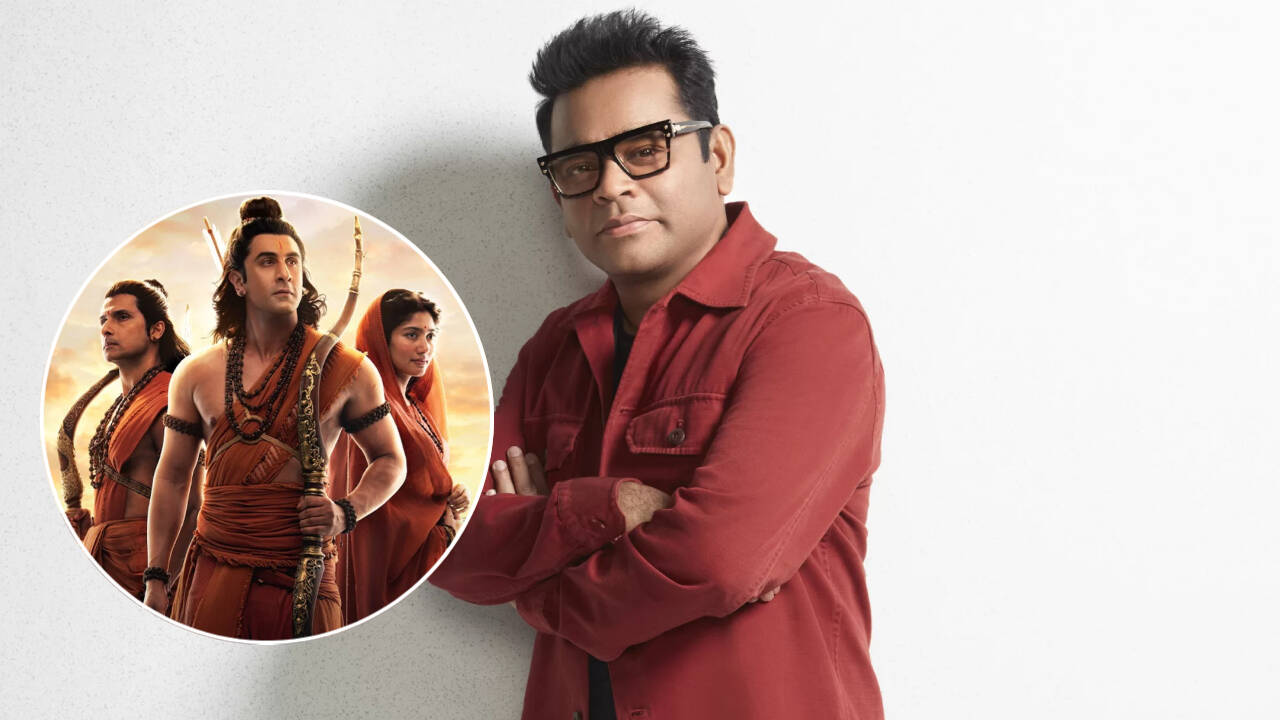
The project, a massive transnational collaboration that pairs Rahman with legendary Hollywood composer Hans Zimmer, represents a watershed moment for Indian cinema’s production standards and global distribution strategy. As digital fandoms fiercely debate the modernization of traditional motifs, institutional stakeholders within the film’s production house are navigating a complex landscape of cultural reverence and commercial innovation. The convergence of two titan composers has amplified both anticipation and scrutiny, turning every musical note into a focal point of intense public discourse.
Set for a high-profile theatrical release on November 5, just ahead of the lucrative Diwali holiday window, the film carries profound economic implications for the post-pandemic box office. The strategic timing of the release aims to capitalize on festive footfall, yet the polarizing online discourse threatens to fracture opening-weekend momentum. Industry analysts note that while Rahman’s stoic defense has galvanized his loyal fan base, it also shines a harsh spotlight on the perilous intersection of mythology, modern artistic interpretation, and algorithmic outrage culture.
📌 Essential Story Takeaways
- AR Rahman publicly addressed criticism regarding the 'Ramayana' musical score, stating he remains focused entirely on his craft rather than online feedback.
- The project features a historic collaboration between AR Rahman and Hollywood heavyweight Hans Zimmer, elevating global production expectations.
- The film's theatrical debut is strategically slated for November 5, positioning it to capture peak box office revenue during the Diwali festive season.
- The controversy highlights the extreme pressures and cultural sensitivities involved in adapting mythological epics for modern, digitally connected audiences.
Historical Background & Contextual Precedents
AR Rahman’s involvement in ‘Ramayana: Rise of a Legend’ was heralded as a masterstroke of casting behind the scenes, bridging Eastern classical traditions with Hollywood’s symphonic grandeur through his partnership with Hans Zimmer. However, this very fusion of styles became the primary catalyst for the recent online debate. Traditionalists accustomed to orthodox devotional instrumentation expressed apprehension upon hearing early conceptual cues, leading to polarized digital exchanges that quickly escalated into trending topics across major social media platforms.
This incident surfaces at a time when the entertainment industry is increasingly vulnerable to manufactured outrage and echo-chamber dynamics on social media. The speed at which artistic choices are dissected, condemned, or defended online has transformed film promotion into a high-stakes geopolitical exercise. Rahman’s measured response reflects an elder statesman’s weariness of ephemeral internet storms, choosing instead to let the final cinematic product speak for its artistic integrity.
Deep-Dive Investigation & Sectoral Impact
However, the modern digital economy thrives on premature critique. Our investigation into the origins of the social media backlash shows that the initial wave of criticism was driven largely by teaser snippets—isolated audio fragments divorced from their narrative and visual context. In the realm of film scoring, where audio-visual synergy is paramount, judging a composition out of sequence often leads to profound misinterpretations. Production executives admitted privately that while the noise on digital platforms is deafening, it rarely correlates with actual consumer intent or ticket-buying behavior.
The economics of modern blockbusters dictate that controversy, even negative discourse, frequently translates into heightened brand visibility. Data analytics from major tracking agencies indicate that despite the vocal critique, overall engagement metrics and pre-release buzz for ‘Ramayana’ have surged by over 40% following the musical controversy. The studio’s distribution supply chain remains fully galvanized, with international IMAX screens locked in and localized dubbing finalized across multiple global territories, proving that institutional confidence remains robust.
Stakeholder Perspectives & Official Statements
Conversely, digital media researchers point out that the incident highlights a growing disconnect between creators and hyper-vocal online communities. Dissident factions within social media forums argue that mythological adaptations owe a strict fidelity to cultural heritage, leaving little room for Western orchestral hybridization. A prominent cultural commentator stated, ‘When you touch the Ramayana, you are dealing with sacred architecture. Every chord progression is scrutinized not just for its musicality, but for its perceived ideological alignment.’
Industry bodies and fellow artists have largely rallied behind Rahman, praising his grace under pressure. Prominent playback singers and lyricists have taken to public platforms to denounce the toxic nature of unsolicited digital critique, reminding audiences of the grueling physical and mental labor required to produce world-class cinematic art. These endorsements reinforce Rahman’s position as an irreplaceable pillar of modern Indian cinema.
Strategic Implications & Future Roadmap
From a policy and industry standpoint, major production houses are expected to recalibrate their pre-release marketing strategies. The lessons learned from this episode suggest a shift toward more contextualized media drops, ensuring that complex artistic endeavors like Rahman and Zimmer’s score are introduced with sufficient narrative scaffolding to mitigate premature online hostility. As the release date approaches, all eyes remain fixed on the box-office charts and the critical reception of the full soundtrack.
Critical dates on the horizon include the official global audio album drop slated for mid-October, followed by the world premiere event in Mumbai. These milestones will provide the ultimate validation of Rahman’s artistic vision, offering the public a complete acoustic experience that will either validate his stoic resilience or permanently alter the conversation surrounding modern mythological adaptations.
❓ Key Questions Answered (FAQ)
The primary trigger was a wave of online criticism and debate across social media platforms following early audio previews and teaser snippets of the musical score for 'Ramayana: Rise of a Legend', particularly concerning the blend of traditional Indian motifs with Hans Zimmer's Western orchestral style.
The primary stakeholders affected are the film's production house, composer AR Rahman, and the viewing public. While digital discourse has become polarized, the immediate consequence has been a significant surge in overall project visibility and pre-release audience engagement.
Key milestones include the official global release of the full film soundtrack in mid-October, the red-carpet world premiere in Mumbai, and the worldwide theatrical debut scheduled for November 5 just ahead of Diwali.





